AI tools are showing up a lot in IT, it’s probably about the only department that’s using this technology more than the marketing peeps. In fact McKinsey flagged IT as having the highest generative‑AI maturity among corporate functions surveyed (about 36% with deployed use cases). Although I note Marketing wasn’t one of the functions they surveyed (cough, biased, cough).
The papers have been full of companies getting rid of their developers, and, more recently, hiring them back. Because AI is an awesome coding assistant, but it is still just an assistant and there is a lot more human needed in IT than top management in some places seemed to realise.
This is not an area I’m strong in, and I know there are people who read this who DO work in this area, and are amazing at it, so I’m not going to make a twit of myself by going on about it.
Although, if any of you (whatever you do for work, or interest) would like to borrow this blog for an article on your experience with AI, do get in touch! It would be fascinating to get other views on encounters with AI – good, bad, or yet to be decided.
Back to this though, coding is a clear use case of interest for the leading edge LLMs (Claude, ChatGPT, Gemini), and its early focus on code is one of the things that’s made Claude the frontrunner in the enterprise market. As someone pointed out in a recent podcast (I can’t remember which one, sorry), an LLM being good at code makes it easier for that LLM to be good at a hell of a lot more, as it can code solutions to other problems.
Where a non-tech, non corporate person might want to use this
Explain unfamiliar code. If you’re trying to work out what’s going on with an app, or website, or excel formula, give the LLM the text (or a screengrab) and ask it to explain. Or to turn it into a plain English summary (useful when it’s one of those error logs where all the text is red and goes on for pages)
Building things without being a coder. You’ve got an idea for a tool that would save you hours every week. In the past, you’d have needed to hire a developer or learn to code. Now you can just vibe code it.
I explored Vibe Coding earlier, but wanted to flag it here as well, as I think it’s a space where software engineering is becoming more accessible, at least at a basic level. I’ve build a bunch of apps in vibe coding platforms (see below), but if I ever wanted to scale them, I would still need real (as in human) developers and code experts. But now, I can give them a much better idea of what I’m thinking of, which saves all of us time and headaches.
If this is some thing you’d like to play with, Claude chat and Google AI Studio are good, free, starting points but my favourite tool is Lovable (which I do have a paid subscription for at the moment. They have a free tier but it makes building very slow as you only get 5 credits per day, which is about enough for one conversational exchange).
I build silly little apps because I can, and then I use them, because they’re suited to my life.
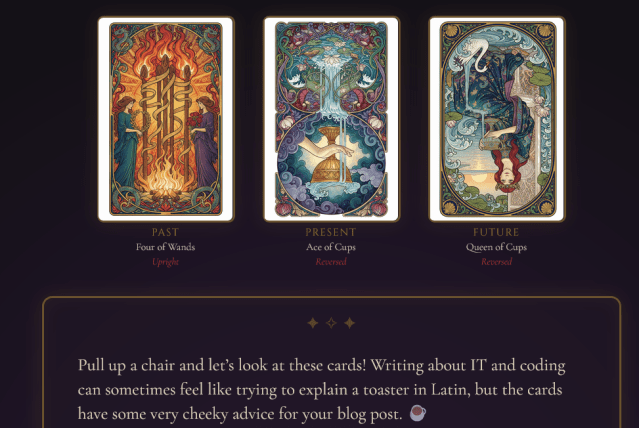
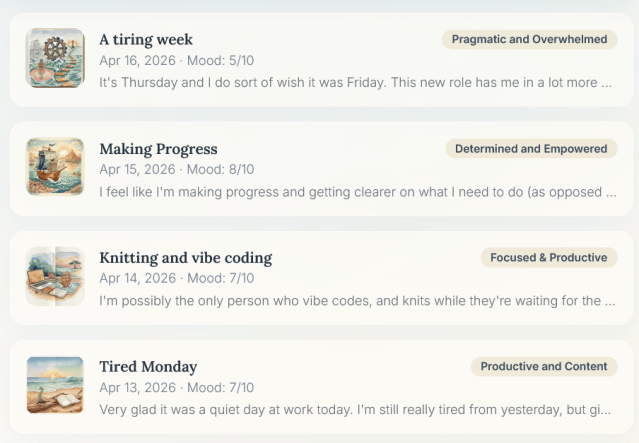
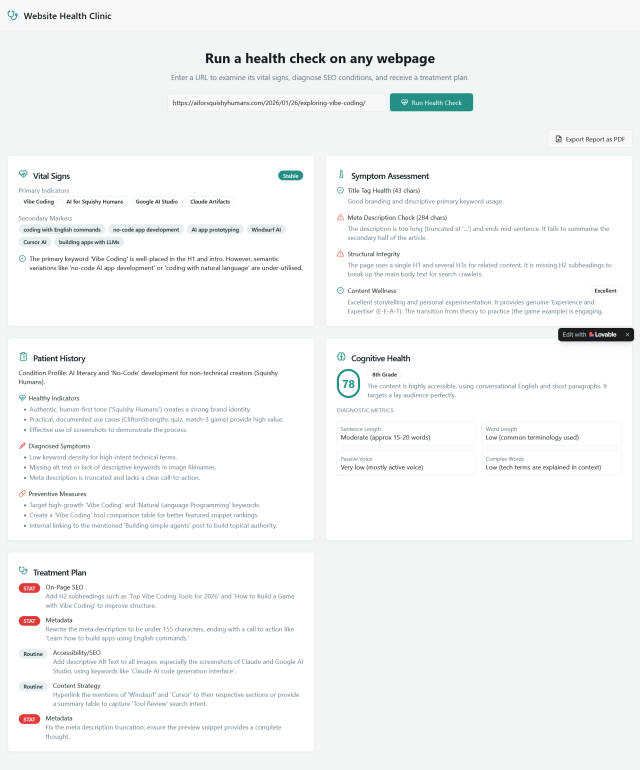
I also build much bigger apps I tend not to share as they use up AI and cloud credits every time they’re used, but here are what a few of them look like:
So, that’s me not really covering AI in IT and software engineering, but I would love anyone involved in this space (or any other) to share their thoughts and stories.

